The Memphis Lift will welcome hundreds of parents, students and community members from across Shelby County to its Citywide Fall Festival on Wednesday, October 28. The free event will bring families together for an evening of games, music, giveaways, community resources and fall festivities.
The event a offers an opportunity for local media to connect directly with Memphis parents about their hopes, concerns and expectations for their communities.
Reporters are invited to attend; capture footage of families enjoying the festivities and speak with parents about what they want to see change in Memphis public schools. The Memphis Lift Executive Director Sarah Carpenter will also be available for interviews about the organization’s ongoing efforts to elevate parent voices and ensure families have a meaningful role in shaping the future of public education in Memphis.
“Every Memphis parent wants strong schools and a brighter future for their children,” said Sarah Carpenter, Executive Director of The Memphis Lift. “This festival is about bringing families together, strengthening our community and reminding parents that their voices matter. Real change starts with families, and we want every parent to know they have the power to make a difference.”
WHAT:
The Memphis Lift Citywide Fall Festival, a free community celebration featuring games, candy, music, giveaways, family activities, community resources and a Checkers/Rally’s Burger Bar. Approximately 300–500 participants are expected.
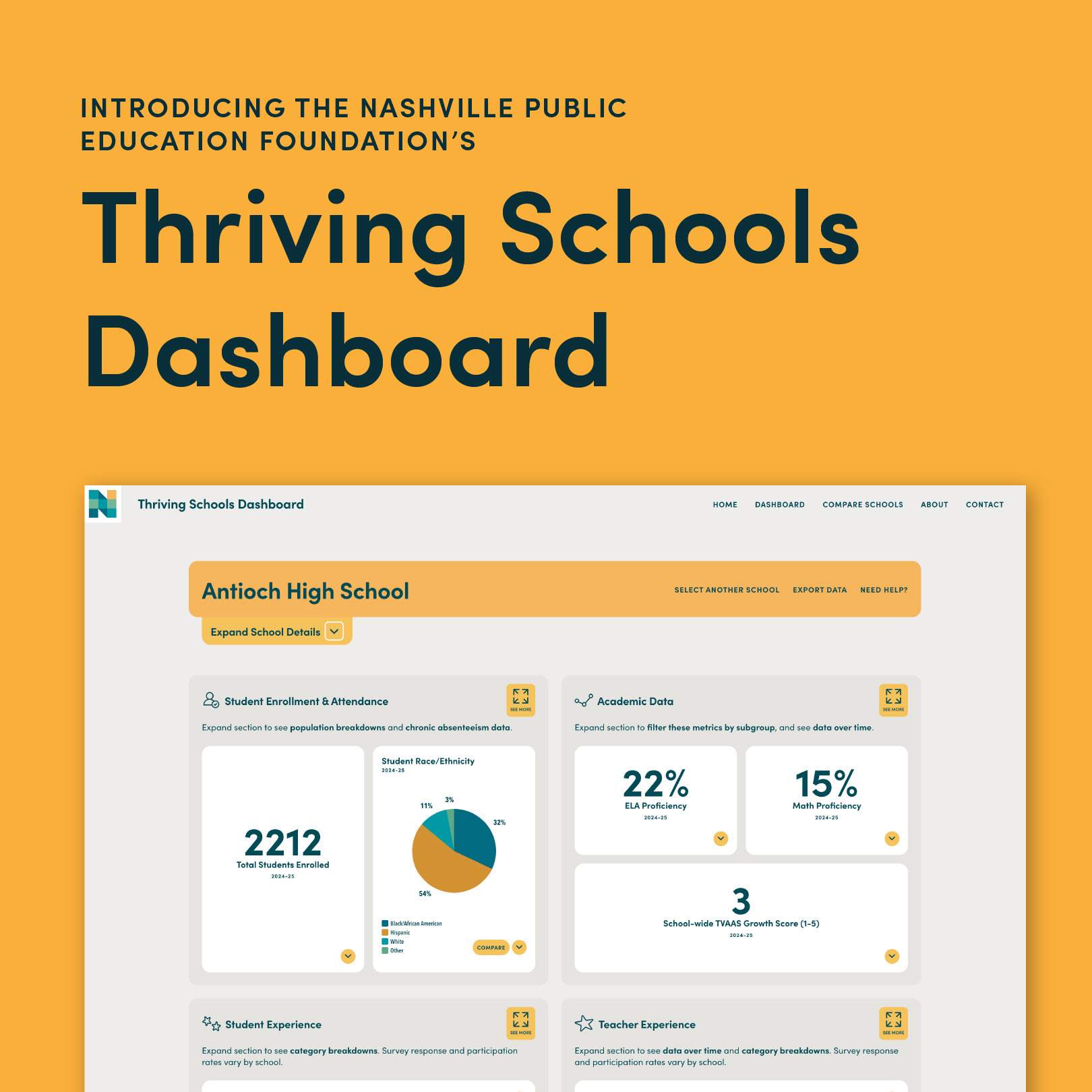
The Nashville Public Education Foundation (NPEF) has compiled data into what the organization is calling the “Thriving Schools Dashboard.”
From an NPEF email:
Our Thriving Schools Dashboard brings together data across four domains — student enrollment and attendance, academic achievement, student experience, and teacher experience. This data speaks to many of the conditions within the Thriving Schools Framework, offering a fuller picture of what it takes to create an environment where all students thrive.
The dashboard shares data for all schools in Metro Nashville Public Schools, including district-authorized charter schools, as well as charter schools in Davidson County authorized by the Tennessee Public Charter School Commission.
The information is drawn from and updated annually based on publicly available state and district sources, including the following:
Tennessee State Report Card Data
Panorama Student and Teacher Experience Surveys
TN2030 Data on statewide goals from Tennessee SCORE’S TN2030 Initiative
We need to stop acting like teachers should be willing to sacrifice their financial security because teaching is their calling. These are educated professionals doing one of the most important jobs in our country, and it’s time we started paying and treating them that way.
I support federal incentives to help states raise teacher pay, expanding student loan forgiveness for educators, and making it easier and more affordable for people to enter the profession. We also need to address burnout, excessive paperwork, and the lack of support teachers receive in their classrooms.
My wife works in our local school system, and my kids attend public schools here in Cumberland County. I see how much our teachers and school employees put into their work, often going above and beyond what their jobs require. We should be doing everything we can to support them, not piling more responsibilities onto their already full plates.
6th District congressional candidate Mike Croley said in an interview about education issues that he supports increasing federal spending on education:
Every child deserves a quality public education, regardless of how much money their parents make or where they happen to live. I recommend strengthening Title I funding for schools serving lower-income communities, meeting the federal government’s funding commitments for special education, and investing in school facilities.
Here in rural Tennessee, our public schools are the foundation of our society. They do much more than just teach reading, writing, and math. They feed kids, they provide mental health support, and they give students opportunities they might not otherwise have. We need to recognize how important that is and fund them accordingly.
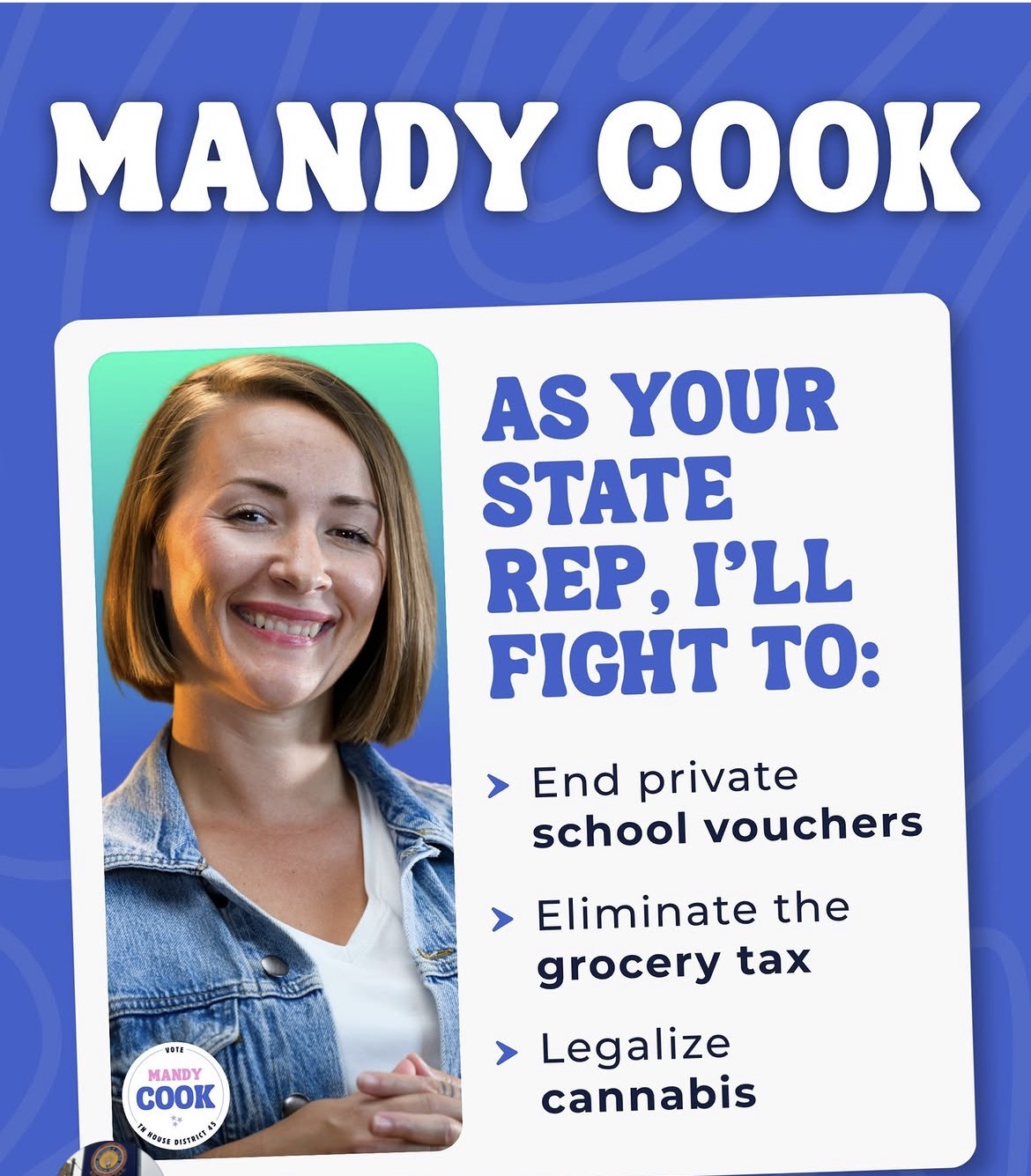
Mandy Cook is the Democratic candidate for State Representative in House District 45.
She took some time to answer questions about her position on key education issues.
1) What is your connection to education? I have a son who will be 5 years old in December. He is currently in pre-K and fall of 2027 will be his first year in Kindergarten. I attended public schools growing up.
2) What do you feel is great about Sumner County Schools? We moved to Sumner County knowing we wanted to start a family one day. Sumner County has a reputation for fantastic public schools including magnet school options like Merrol Hyde and Union.
3) What are your goals for Tennessee public education? I want to see the voucher program phased out and reinvest those funds into public education throughout the state. In recent years, Tennessee has lost more teachers than any other state in the country. We are failing teachers and students by not investing properly in public education and public educators.
4) Tennessee is last in the nation in investment in schools – nearly $2 billion below Mississippi. What should the state do to improve its support for schools? Properly funding our schools should be one of our state legislature’s top priorities. This past legislative session, we saw millions of our tax dollars poured into wasteful bills that do nothing to improve the lives of Tennesseans- bills renaming parts of foreign countries (HB 1446) and a mid-decade redistricting bill (HB 7001 through HB 7005). State legislators are wasting our hard-earned tax dollars on culture wars and school vouchers. We need to get people in office who understand the value of investing in Tennessee’s future. That means spending legislative time well and spending tax dollars wisely.
5) What new programs or improvements for K-12 education are important to you? As a parent who struggles to pay for pre-K for my own child, I am a strong advocate for publicly-funded pre-K expansion. Our state currently offers Voluntary Pre-K options publicly. The program prioritizes children of lower-income families, but as more and more families struggle with the cost of living, I believe we should be expanding access. Data consistently shows that children who receive education prior to Kindergarten perform better throughout their schooling. Strengthening access to Pre-K not only benefits working parents and their employers, but benefits a child’s long term education.
6) What’s your position on the state’s voucher program? Do you believe the $300 million the state has allocated to vouchers is a wise investment? Vouchers were sold to Tennesseans in a disingenuous way, and they have failed our state since materializing. The data is clear. School vouchers are failing. Most school voucher recipients are kids whose families were able to afford private school prior to them receiving a discount. In addition, they are not performing as well as their public school peers. Tennessee’s education system is truly in the midst of a crisis, and it’s no coincidence that it is happening after school vouchers were introduced.
7) The state has a $1.2 billion surplus – do you believe some or all of that money should go to public education? Financial solvency is great news! However, our state funding for road infrastructure is about to face a sizable deficit. My fear is that roads and schools will be battling it out for proper funding. We need multiple forward-thinking policies to address Tennessee’s fiscal needs, including legalizing and taxing cannabis. Yes, available surplus money would be well-spent on public education, but we also need permanent and annual public schools investment.
State Rep. Scott Cepicky of Maury County, who chairs one of two Education Committees in the Tennessee House of Representatives, told WKRN in Nashville that he’s looking at an effort to have the state take over Nashville schools.
The Nashville Public Education Foundation (NPEF) is now accepting applications for Teacherpreneur:
Teacherpreneur is one of our signature programs that guides participants in developing their big idea through five impactful professional learning sessions. Ideas are explored, honed, and strengthened to become pitch night-ready. That’s when the top ideas will be awarded a total of $25,000 in cash prizes in addition to seed funding to implement a pilot program.
The application will close on Sunday, November 15, 2026. Eligible educators in Nashville’s public schools, including teachers, librarians, and counselors, are welcome to apply. For questions about Teacherpreneur, email Colleen Gilligan, Director of Strategic Initiatives.
That comes days after the oversight board met for the first time in months. In Thursday’s virtual meeting, the nine board members fast-tracked approval of key policies and procedures developed largely by Tampa-based consulting firm MGT during the court-ordered pause this summer.
After a judge initially stopped the state from taking over Memphis-Shelby County Schools, it appears the plan to let the state run the system is back on track.
Crenshaw ordered the oversight board chair to notify the court under oath once the board is “ready, willing, and able” to begin its work, a step that could allow the politically appointed board to assume control of the district within days.